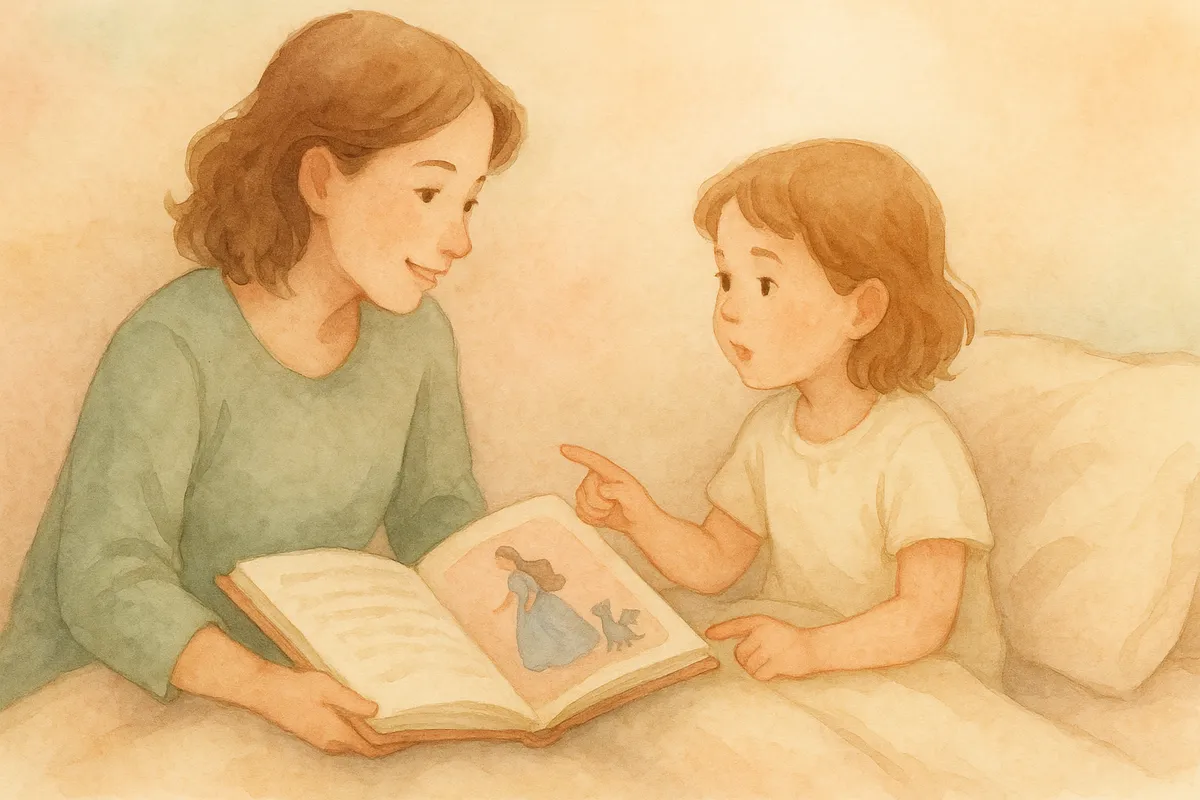
Transform bedtime into an interactive adventure! Discover how to turn your child into a story co-creator and spark their imagination with these proven techniques.
Picture this: your little one is tucked into bed, eyes wide with wonder as you tell them about brave Princess Luna who discovers a magical kingdom hidden inside her grandmother's music box. But instead of just listening, your child starts asking questions – "What color is Luna's dress?" "Does she have a pet dragon?" "Can she fly?" Suddenly, what started as a simple bedtime story transforms into an incredible adventure that your child is helping to create.
This is the magic of imaginative storytelling – when children become active participants in the stories they hear, their creativity soars. With Fablino, your child can shape their own personalized adventure from the very first session — just describe their interests and the story bends around them. When you encourage your child to engage their imagination during story time, you're not just entertaining them; you're building essential cognitive skills, boosting their confidence, and creating precious bonding moments that'll last a lifetime.
When Stories Feel One-Sided and Predictable
Many parents find themselves stuck in storytelling ruts, reading the same books night after night or telling familiar tales that don't spark much excitement. Your child might listen politely, but you notice their attention wandering or their eyelids drooping from boredom rather than sleepiness.
The real challenge isn't finding stories to tell – it's finding creative bedtime stories that truly capture your child's imagination and make them feel like they're part of the adventure. Traditional storytelling often puts children in passive roles as listeners, missing out on opportunities to flex their creative muscles and contribute their own ideas.
When stories become predictable routines rather than imaginative journeys, children lose interest quickly. They might fidget, interrupt, or ask to skip story time altogether. This happens because their minds aren't being challenged or engaged in meaningful ways. Without that spark of personal connection and creative involvement, even the most beautifully written stories can feel flat and uninspiring.
Turn Your Child Into the Story's Co-Creator
Involving your child in story creation transforms them from passive listener to active participant. When children contribute ideas to stories, they invest emotionally in the outcome and stay engaged throughout the entire experience.
Start by asking open-ended questions during your storytelling. If you're telling a story about Captain Maya exploring a mysterious island, pause and ask, "What do you think Maya finds when she opens the treasure chest?" Let your child's answer guide the next part of the story.
Create story branches by offering choices. "Should Captain Maya climb the tall mountain or explore the dark cave first?" This gives your child control over the narrative direction.
Write down or remember the details your child adds. When they suggest that Maya has a talking parrot named Sparkles, make sure Sparkles appears throughout the story and plays important roles.
Build Stories Around Your Child's Current Interests
Personalization is key to effective child engagement techniques. When stories reflect your child's passions and curiosities, they naturally become more invested in the narrative.
Pay attention to what excites your child during the day – are they fascinated by dinosaurs, space, cooking, or animals? Weave these interests into your storytelling strategies.
If your child loves trucks, create adventures featuring Truck Driver Emma who delivers magical supplies to fairy tale characters. If they're obsessed with cooking, tell stories about Chef Oliver who uses his culinary skills to solve problems in his enchanted kitchen.
Make your child the expert by asking for their knowledge. "You know so much about dinosaurs – what kind should Emma meet on her adventure?" This validates their interests while encouraging them to share what they've learned.
Use Sensory Details to Paint Vivid Mental Pictures
Rich sensory descriptions help children create detailed mental images, making stories feel more real and immersive. When you engage multiple senses, you're strengthening your child's ability to visualize and imagine.
Don't just say Firefighter Jake entered the building – describe how his heavy boots echoed on the wooden floors, how the air smelled like smoke, and how his flashlight beam cut through the darkness.
Encourage your child to add sensory details too. Ask questions like, "What do you think the enchanted forest sounds like?" or "How does the dragon's cave smell?"
Create physical connections by having your child act out parts of the story. Let them pretend to climb mountains, swim through oceans, or tiptoe through mysterious castles.
Encourage "What If" Thinking Throughout Stories
Promoting hypothetical thinking during storytelling develops your child's problem-solving skills and creativity. "What if" questions open up endless possibilities and show children that there are multiple ways to approach challenges.
Pause at crucial story moments to explore alternatives. When Detective Sophie faces a locked door, ask, "What if she didn't have the key? How else could she get inside?"
Let your child's suggestions influence the story's direction, even if they seem silly or unconventional. If they suggest that Sophie could shrink down and crawl under the door, embrace that magical possibility.
Celebrate creative thinking by showing excitement about their ideas. "That's such a clever solution! I never would have thought of that!"
Technology That Sparks Creativity
While traditional storytelling techniques are wonderful, sometimes parents need fresh inspiration to keep imaginative storytelling exciting and new. Fablino creates personalized AI bedtime stories that incorporate your child's name, interests, and preferences, providing endless story possibilities that feel tailor-made for your little one.
These personalized stories serve as springboards for even more creativity. You can expand on the characters and situations, ask your child what happens next, or even create sequels together. The key is using any story – whether you create it yourself or get inspiration from other sources – as a starting point for collaborative imagination.
Your Family's Storytelling Adventure Begins Now
Every child has a unique imagination waiting to be discovered and nurtured. By making storytelling interactive, personal, and engaging, you're giving your child tools they'll use throughout their lives – creativity, confidence, and the ability to see possibilities everywhere.
Start tonight with just one small change to your usual bedtime routine. Ask one extra question, let your child make one story decision, or add one detail based on their current favorite thing. Watch how their eyes light up when they realize they have the power to shape the stories they hear.
Create Your Child's Story
Make your child the hero of their own personalized bedtime story with professional narration.
Try Fablino FreeRelated Stories
Free Audio Bedtime Stories for Kids: The Complete Guide
Looking for free audio stories your kids can listen to at bedtime? Here are the best free sources for toddlers through age 10, including downloads for Toniebox and Yoto.
Best Bedtime Story Apps for Kids in 2026
Looking for the best bedtime story app? We compared the top storytelling apps for kids in 2026, from AI-generated tales to soothing narrated adventures.
Engaging Kids During Quiet Time with Personalized Audio Stories
Transform quiet time struggles into peaceful moments with personalized audio stories that engage your child's imagination and develop their listening skills.