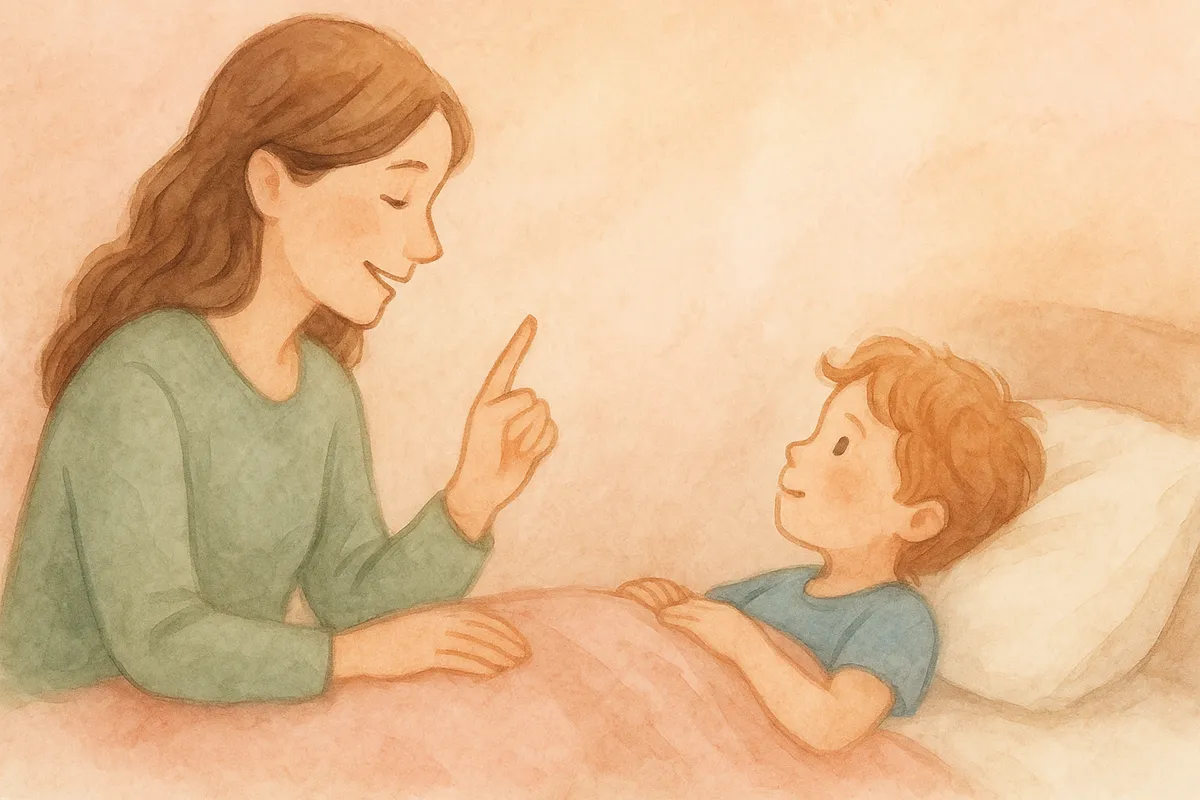
Transform bedtime battles into magical moments with these 5 creative storytelling techniques that engage kids and help them drift peacefully off to sleep.
It's 8:47 PM. You've read the same book for the third time tonight, and your 5-year-old is still wide awake, asking "What happens next?" even though you both know the story by heart. Sound familiar?
You're not alone in this bedtime struggle. Many parents find themselves stuck in storytelling ruts, wondering how to make bedtime stories more engaging without turning into a three-hour production. The good news? With a few creative storytelling tips, you can transform those lengthy bedtime battles into magical moments that actually help your little ones drift off to sleep. For kids whose wakefulness is rooted in worry, personalized stories can also help combat nighttime anxiety.
The secret isn't about finding the perfect book or having a theater background. It's about technique — and if you want to go deeper, these fun storytelling techniques for kids expand on the ideas here. It's about knowing how to bring stories to life in ways that captivate your child's imagination while gently guiding them toward dreamland.
Why Kids Stay Wired During Story Time
Here's what's really happening when your child seems more energized after story time than before: traditional storytelling often stimulates rather than soothes.
When we read in monotone voices or rush through familiar tales, kids' brains aren't fully engaged. They're hearing words, but they're not transported into the story world. This leaves mental energy buzzing around with nowhere to go.
Plus, many parents unknowingly create excitement when they're trying to be entertaining. Loud voices, dramatic gestures, and fast-paced delivery can amp kids up instead of calming them down.
The other issue? Predictability without engagement. When children know exactly what's coming next, their minds start wandering to tomorrow's playground adventures or that toy they left downstairs. They're physically present but mentally elsewhere.
This is why the same book that worked last month suddenly isn't doing the trick. Your child has outgrown the way you're telling it, not the story itself. They need storytelling that evolves with their growing imagination while still providing the comfort of familiar routines.
Use Your Voice Like a Magic Wand
Your voice is the most powerful tool you have for engaging kids during bedtime stories. The way you modulate tone, pace, and volume can literally lull children into a sleepy trance.
Start stories with your normal speaking voice, then gradually slow down and soften as you progress. This natural decline mirrors how our bodies prepare for sleep. When you reach the story's end, you should almost be whispering.
Try this tonight: Give each character a distinct voice, but keep them all gentle. The brave knight might speak slowly and confidently, while the wise owl uses a soft, measured tone. Avoid high-pitched or loud character voices that can be jarring.
Create vocal "texture" by stretching out descriptive words. Instead of saying "the wind blew," try "the wind whooooshed softly through the trees." This technique naturally slows your pace and adds a hypnotic quality to your storytelling.
Make Your Child the Hero of Every Tale
Nothing captures a child's attention quite like hearing their own name woven into a story. This simple storytelling tip transforms passive listeners into active participants.
Instead of reading about generic characters, adapt stories to feature your child as the main character. "Once upon a time, there was a brave little girl named Emma who lived in a cozy house much like yours."
Incorporate details from their real life. Maybe the story princess has the same favorite stuffed animal, or the adventure happens in a place that looks suspiciously like your backyard. These personal connections help children visualize themselves in the story world.
Ask gentle questions that let them contribute: "What do you think Emma packed in her magical backpack?" or "Which path should she choose?" Keep questions simple and avoid anything too stimulating or complex.
This approach works because children naturally focus better when they feel personally invested in the outcome.
Paint Pictures with Sensory Details
Engaging kids through storytelling means activating all their senses, not just their hearing. Rich sensory descriptions help children's minds create vivid mental movies.
Describe how things feel: "The dragon's scales were smooth like river rocks," or "The princess's blanket felt as soft as clouds." These tactile details help kids imagine themselves touching story elements.
Include gentle sounds and smells: "They could hear crickets singing their nighttime lullaby," or "The kitchen smelled like warm cinnamon cookies." Sensory language creates immersive experiences that naturally quiet busy minds.
Use "sleepy" sensory words toward the story's end. Describe cozy beds, warm blankets, gentle breezes, and peaceful sounds. This primes your child's brain for their own transition to sleep.
Practice this by taking any simple story and adding one sensory detail to each page. You'll be amazed how much more engaged your child becomes.
Create Anticipation with Cliffhangers
Serial storytelling is one of the most effective techniques for making bedtime something kids actually look forward to. Instead of complete stories each night, create ongoing adventures that continue over several bedtime sessions.
Develop a recurring character who has different adventures. Maybe it's "Sleepy Bear" who explores a new part of the Dreamland Forest each night, or "Captain Cozy" who sails to different peaceful islands.
End each night's segment at a gentle cliffhanger: "And tomorrow night, we'll find out what magical creature lives in the crystal cave." This gives children something pleasant to anticipate without being too exciting.
Keep a simple notebook to track your ongoing stories. Jot down character names, plot points, and where you left off. This helps maintain consistency and shows your child that their bedtime stories are special enough to remember.
This technique works because it creates positive associations with bedtime while giving you creative flexibility night after night.
When You Need Fresh Story Ideas
Sometimes even the most creative parents run out of storytelling inspiration. That's completely normal, and there's no shame in seeking help to keep bedtime stories fresh and engaging.
Personalized AI bedtime stories, like those from Fablino, can provide that spark of creativity when you're feeling stuck. These tools can generate unique tales featuring your child as the main character, giving you new material while maintaining that personal connection kids love.
The key is finding resources that complement your storytelling style rather than replace it. Whether it's story apps, library books, or inspiration from your own childhood, having a variety of sources keeps bedtime interesting for everyone.
Tonight, Try This
Pick just one of these storytelling tips to experiment with tonight. Maybe you'll slow your voice as the story progresses, or perhaps you'll make your child the hero of their favorite book.
Remember, the goal isn't perfection – it's connection. When you put creativity and love into bedtime stories, you're not just helping your child fall asleep. You're creating magical memories that will last a lifetime.
Create Your Child's Story
Make your child the hero of their own personalized bedtime story with professional narration.
Try Fablino FreeRelated Stories

Free Audio Bedtime Stories for Kids: The Complete Guide
Looking for free audio stories your kids can listen to at bedtime? Here are the best free sources for toddlers through age 10, including downloads for Toniebox and Yoto.
Best Bedtime Story Apps for Kids in 2026
Looking for the best bedtime story app? We compared the top storytelling apps for kids in 2026, from AI-generated tales to soothing narrated adventures.

Engaging Kids During Quiet Time with Personalized Audio Stories
Transform quiet time struggles into peaceful moments with personalized audio stories that engage your child's imagination and develop their listening skills.