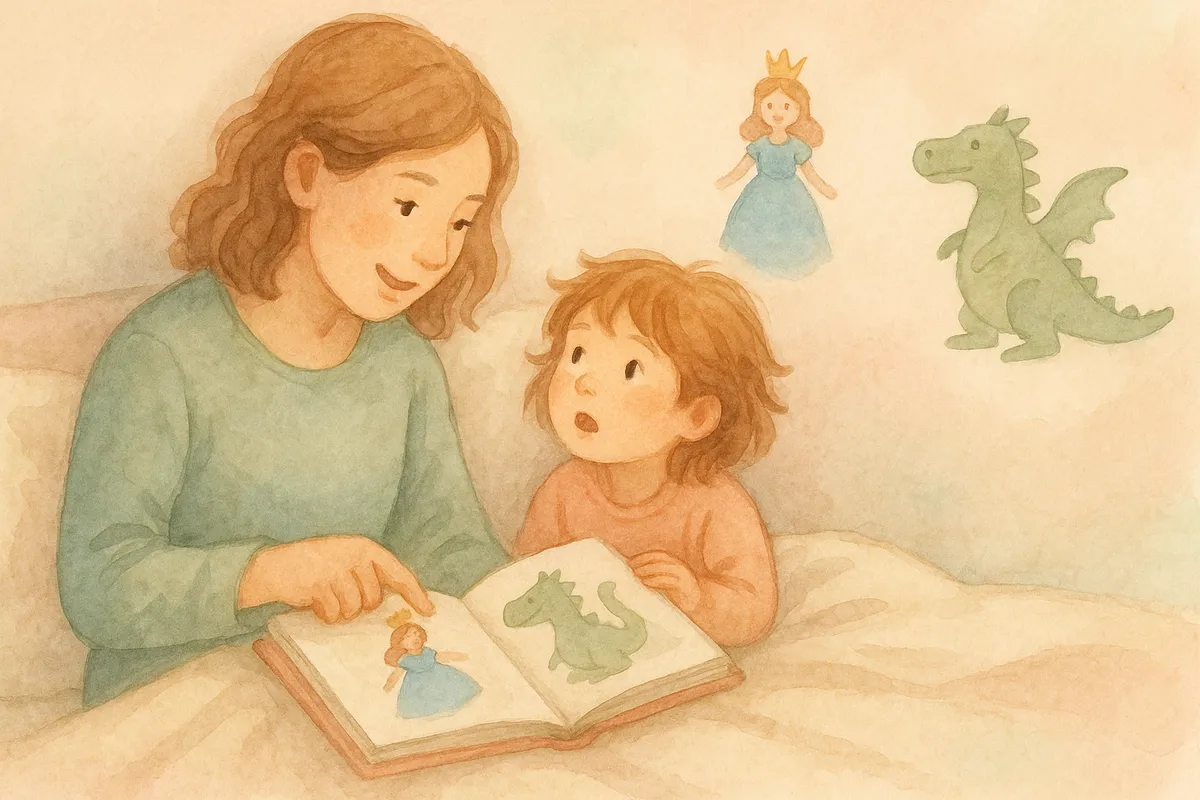
Transform bedtime with interactive storytelling! Discover how letting kids make choices, solve problems, and shape adventures creates deeper engagement.
Interactive Storytelling: Engaging Kids with Fablino
Your little one is wiggling under the covers, eyes wide open despite the day's adventures. You start reading their favorite book, but halfway through, they're asking questions, suggesting plot changes, and wondering what would happen if the princess became a dragon instead. Rather than seeing this as an interruption, what if these moments of curiosity are actually golden opportunities?
Interactive storytelling transforms passive listening into active participation. For a quick-start set of techniques, these 5 creative storytelling tips are a great companion read, turning your child into a co-creator of magical worlds. When kids can influence the story's direction, choose character actions, or solve problems alongside their favorite heroes, something beautiful happens – they become deeply invested in the narrative. This engagement doesn't just make bedtime more fun; it builds critical thinking skills, boosts creativity, and strengthens the precious bond between you and your child through shared imagination.
When Stories Feel One-Sided and Predictable
Traditional bedtime stories, while comforting, can sometimes feel like a one-way street. You read, they listen, and that's it. Many children crave more involvement in the stories they hear, especially in our interactive digital age where they're used to having choices and influence over their experiences.
When kids can't participate in storytelling, they might lose interest quickly, become restless, or simply tune out. You've probably noticed this happening – their attention wanders, they start fidgeting, or they ask to skip to the end. This isn't because they don't love stories; it's because they're naturally wired to be active participants in their learning and entertainment.
The challenge becomes even more pronounced when you're reading the same stories repeatedly. While repetition has its place in child development, kids also need novelty and the excitement of not knowing exactly what comes next. Without interactive elements, even the most beloved tales can start to feel stale, making bedtime feel like a chore rather than a cherished ritual.
Let Your Child Steer the Adventure
Giving children control over story direction taps into their natural desire for autonomy while keeping them engaged. When kids can make choices for characters, they feel ownership over the narrative and stay invested in the outcome.
Imagine telling a story where Emma reaches a mysterious forest path that splits in three directions. Instead of automatically choosing for her, pause and ask your child: "Should Emma take the sparkly path, the one lined with singing flowers, or the mysterious shadowy trail?" Their choice shapes the entire adventure.
Start by offering simple either-or decisions, then gradually introduce more complex choices. Create natural pause points in your stories where decisions need to be made. Always acknowledge their choice enthusiastically – "Oh, the flower path! I wonder what Emma will discover there!"
Transform Your Child into the Problem-Solver
Children love feeling capable and smart, and interactive storytelling gives them countless opportunities to be the hero who saves the day. When characters face challenges, invite your child to brainstorm solutions alongside them.
Picture a story where Max is trapped in a tower with only a rope, a mirror, and a sandwich. Instead of immediately revealing how he escapes, ask your child: "What do you think Max should do with these three things?" Their creative solutions might surprise you and definitely will delight them.
Pose problems that match your child's developmental level. Encourage wild, creative thinking by responding positively to all suggestions. Build on their ideas, even if they seem silly – often the most imaginative solutions come from the most unexpected places.
Create Characters That Mirror Your Child's World
Personalized stories featuring characters who share your child's interests, challenges, or experiences create immediate emotional connections. When children see themselves reflected in stories, they become naturally more invested in the outcomes.
If your child loves soccer and has been nervous about an upcoming game, create a story about Zoe, a young soccer player facing similar feelings. Ask questions like: "What advice would you give Zoe?" or "How do you think Zoe should practice for her big game?"
Incorporate details from your child's real life – their favorite foods, pets, friends' names, or recent experiences. Ask them to describe what the character should look like or what special powers they might have. Let them name supporting characters or choose the setting for adventures.
Bring Sound Effects and Voices into Play
Multi-sensory engagement keeps children actively participating even when they're not making story decisions. Encouraging them to contribute sounds, voices, or actions makes them feel like essential parts of the storytelling process.
When brave knight Oliver's horse gallops across the countryside, have your child create the clip-clop sounds. If a dragon appears, let them roar. When characters whisper secrets, both of you whisper too. These physical and vocal interactions keep restless bodies engaged while supporting the narrative.
Assign your child specific sound effects or character voices at the story's beginning. Pause expectantly when their cue comes up, giving them time to contribute. Vary the types of participation – sometimes sounds, sometimes actions, sometimes voices.
How Technology Can Enhance Your Storytelling Toolkit
While nothing replaces the magic of parent-child storytelling time, modern tools can add exciting new dimensions to your interactive adventures. Fablino creates personalized bedtime stories that naturally incorporate your child's name, interests, and preferences, giving you a starting point for even more interactive experiences.
These AI-generated stories can serve as launching pads for your own creative additions. You might read a Fablino story about your child's adventure, then ask what happens next, or how they would handle a similar situation. The personalized elements already built into these stories make it easier for children to see themselves as active participants.
The key is using technology as a complement to, not a replacement for, your own storytelling creativity and the irreplaceable connection that comes from sharing stories together.
Your Storytelling Journey Starts Tonight
Interactive storytelling isn't about being perfect or having all the answers – it's about creating space for your child's imagination to flourish alongside yours. Every question you ask, every choice you offer, and every silly voice you encourage builds stronger connections and more confident, creative thinkers.
Start small tonight. Pick one interactive element and see how your child responds. Their enthusiasm will guide you toward the storytelling approaches that work best for your family, creating bedtime memories you'll both treasure for years to come.
Create Your Child's Story
Make your child the hero of their own personalized bedtime story with professional narration.
Try Fablino FreeRelated Stories
Free Audio Bedtime Stories for Kids: The Complete Guide
Looking for free audio stories your kids can listen to at bedtime? Here are the best free sources for toddlers through age 10, including downloads for Toniebox and Yoto.
Best Bedtime Story Apps for Kids in 2026
Looking for the best bedtime story app? We compared the top storytelling apps for kids in 2026, from AI-generated tales to soothing narrated adventures.

Engaging Kids During Quiet Time with Personalized Audio Stories
Transform quiet time struggles into peaceful moments with personalized audio stories that engage your child's imagination and develop their listening skills.