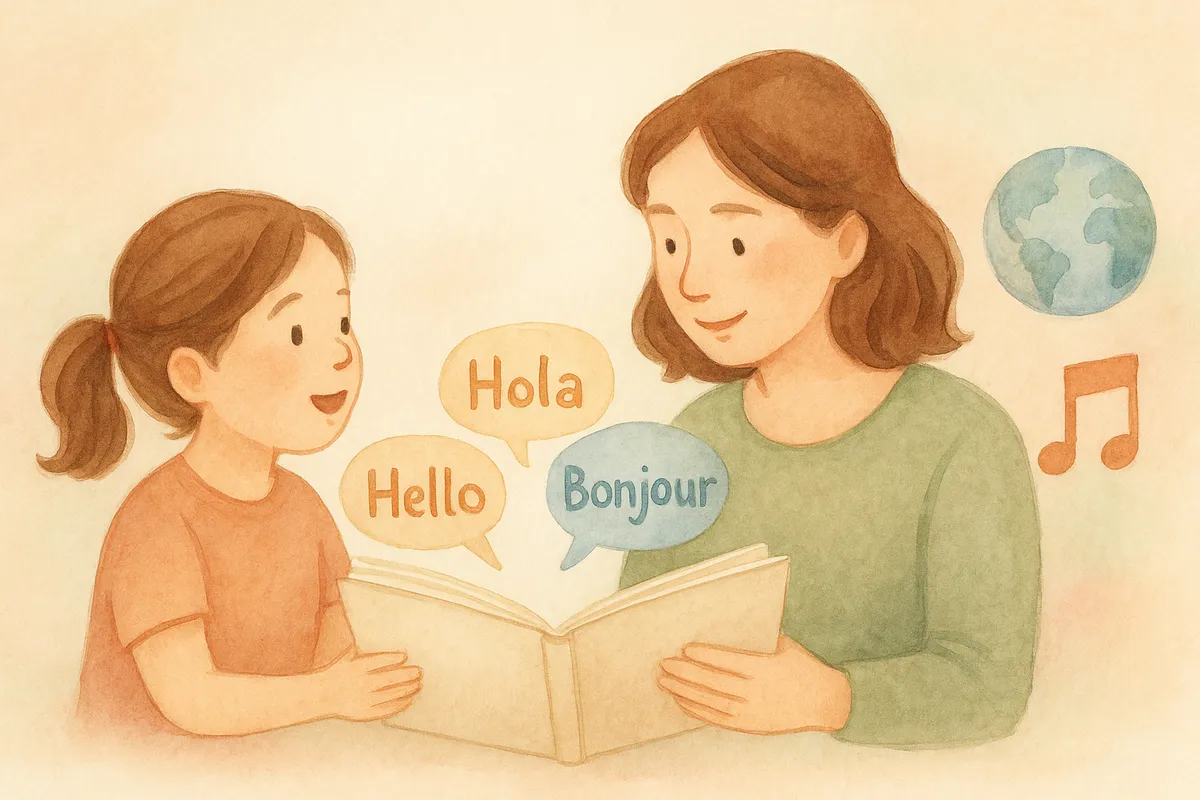
Discover how multilingual storytelling naturally introduces children to new languages and cultures through engaging, personalized audio adventures they'll love.
Picture this: your 6-year-old comes home from school chattering about their friend who speaks Spanish at home, or maybe they've been fascinated by the French phrases they heard in their favorite movie. Children are naturally curious about different languages and cultures, and this curiosity opens up incredible opportunities for learning and growth. With Fablino, you can generate personalized stories in English, German, or Spanish — with professional voice narration in each language.
Multilingual storytelling taps into this natural fascination, offering kids a window into different worlds while building language skills in the most enjoyable way possible. When children hear stories that weave together multiple languages, they're not just being entertained—they're developing cultural awareness, improving their listening skills, and potentially laying the foundation for lifelong multilingual abilities.
The beauty of multilingual storytelling lies in its ability to make language learning feel like play rather than work. Instead of formal lessons or flashcards, children absorb new words and phrases through engaging narratives that capture their imagination.
When Language Learning Feels Like a Mountain to Climb
Many parents want to introduce their children to different languages but feel overwhelmed by where to start. Maybe you speak another language at home but struggle to find age-appropriate content that bridges both languages naturally. Or perhaps you're monolingual yourself but recognize the cognitive and cultural benefits of multilingual exposure for your child.
Traditional language learning resources often feel too structured for young children, focusing on vocabulary drills rather than storytelling magic. Picture books in other languages can be expensive and hard to find, especially ones that blend languages in ways that feel natural rather than forced.
There's also the challenge of pronunciation and authenticity. You might worry about teaching your child incorrect pronunciation or cultural nuances you're not familiar with. Finding quality multilingual content that's both educational and entertaining feels like searching for a needle in a haystack.
The result? Many families give up on multilingual exposure altogether, missing out on those crucial early years when children's brains are most receptive to language learning.
Start Small with Familiar Words and Phrases
The key to successful multilingual storytelling is beginning with words your child already knows or can easily guess from context. This builds confidence and keeps them engaged rather than frustrated.
When children hear familiar concepts in new languages, their brains naturally start making connections. They begin to understand that the same idea can be expressed in different ways, which is fundamental to language learning.
Start by introducing simple greetings, numbers, colors, or family terms within English stories. For example, if Emma loves stories about animals, she might hear about "un gato" (a cat) or learn that "drei" means three when counting puppies.
Choose one or two languages to focus on initially rather than overwhelming your child with multiple new sounds. Pick languages that have personal meaning to your family or practical value in your community. Repeat new words naturally throughout the story so children hear them multiple times in different contexts.
Create Cultural Bridges Through Character Adventures
Multilingual storytelling becomes most powerful when it connects language to culture, helping children understand that languages carry stories, traditions, and ways of seeing the world.
Cultural context makes new words memorable and meaningful. When children learn "abuela" while hearing about a grandmother's special recipes, they're absorbing both language and cultural understanding simultaneously.
Imagine Oliver going on adventures where he visits different countries, learning not just how to say "hello" in various languages, but understanding when and how people use these greetings. He might learn about siesta time in Spain or discover why "hygge" is such an important concept in Denmark.
Incorporate cultural elements like food, celebrations, or daily routines into multilingual stories. Connect new vocabulary to experiences your child can relate to, like playing with friends or helping in the kitchen. Use characters from different cultural backgrounds as natural bridges to introduce their languages and customs.
Build Listening Skills Through Repetition and Rhythm
Multilingual storytelling naturally develops sophisticated listening skills as children learn to distinguish between different sounds, rhythms, and language patterns.
Repetition in storytelling isn't boring—it's how children's brains process and retain new information. When they hear the same phrases multiple times across different stories, those words become part of their passive vocabulary.
Consider how Mia might hear counting songs that switch between English and Spanish numbers, or adventure stories where characters use the same helpful phrases in different languages throughout their journey.
Look for stories with natural rhythm and rhyme that make new sounds easier to remember. Choose content where multilingual elements feel integrated rather than forced or educational. Allow your child to listen to the same multilingual stories multiple times—repetition builds familiarity and confidence.
Audio Stories That Speak Every Language
Personalized audio stories take multilingual learning to the next level by incorporating your child's name and interests while introducing different languages naturally. Fablino generates and narrates multilingual stories that your child can listen to independently, whether they're in the car, having quiet time, or winding down before bed.
When children hear their own name woven into adventures that span different cultures and languages, the learning becomes deeply personal and engaging. They're not just passive observers—they're active participants in multilingual worlds.
These personalized audio experiences can adapt to your family's specific language goals, whether you want gentle exposure to new sounds or more structured vocabulary building within entertaining narratives.
Your Child's Multilingual Journey Starts Today
Every child has the potential to embrace multiple languages when the learning feels joyful rather than forced. Start where you are, with whatever languages interest your family most, and watch as your child's curiosity about different cultures and ways of communicating begins to flourish.
Remember, you're not just teaching vocabulary—you're opening doors to understanding and connecting with people from all around the world.
Create Your Child's Story
Make your child the hero of their own personalized bedtime story with professional narration.
Try Fablino FreeRelated Stories
Exploring the Benefits of Multilingual Children's Stories
Discover how multilingual children's stories build language skills and cultural awareness through personalized audio adventures your child will love.
Unlocking Multilingual Adventures: Personalized Stories for Kids
Discover how multilingual audio stories can introduce your child to new languages naturally, creating engaging adventures that spark curiosity and cultural understanding.
Unlocking Creativity: Multilingual Stories for Kids
Discover how multilingual audio stories help children develop language skills naturally while exploring diverse cultures through personalized adventures.