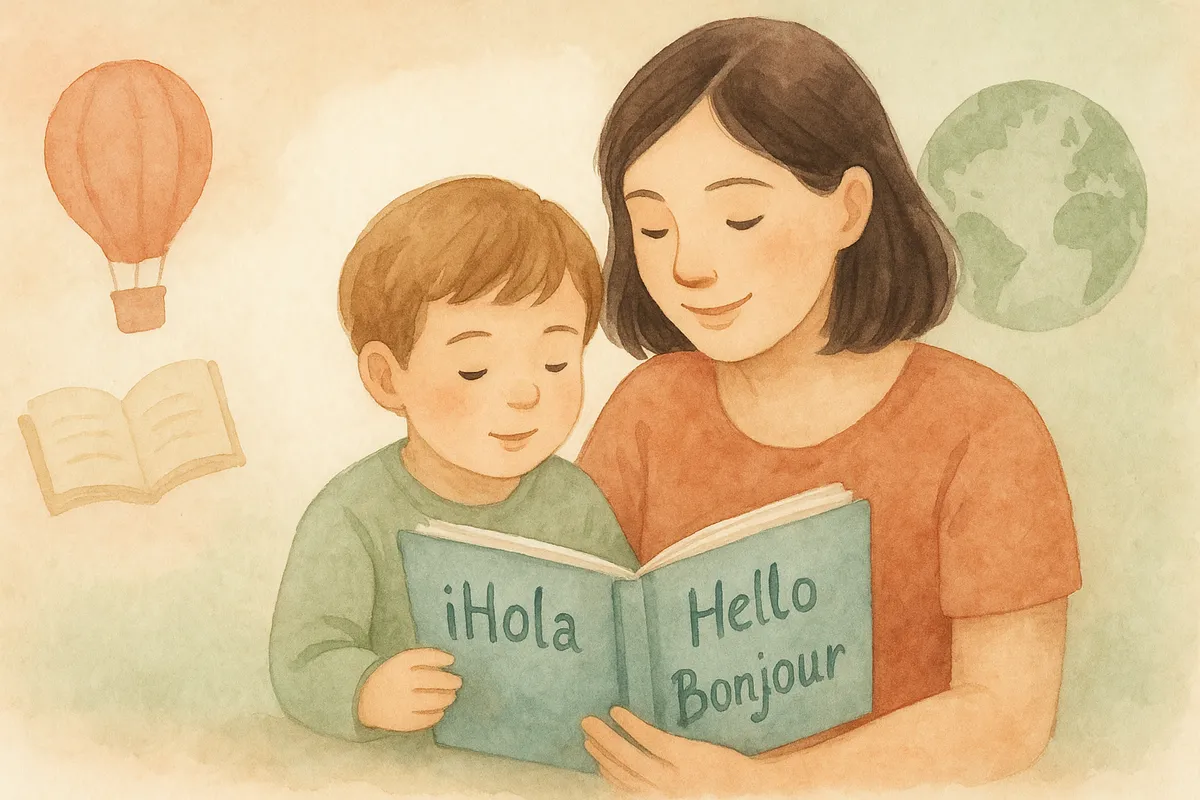
Discover how multilingual audio stories can introduce your child to new languages naturally, creating engaging adventures that spark curiosity and cultural understanding.
Compatibility note: Fablino creates standard MP3 audio files that can be loaded onto Toniebox, Yoto Player, FABA, and other MP3-compatible devices. Fablino is not affiliated with, endorsed by, or sponsored by Boxine GmbH (Toniebox®), Yoto Ltd (Yoto®), or any FABA trademark owner. All third-party brand names are the property of their respective owners.
See our full Trademark Disclaimer →Have you ever watched your child's eyes light up when they hear a story in a new language? Maybe it's Spanish words mixed with English, or perhaps French phrases that make them giggle with curiosity. There's something magical about multilingual children's stories that opens doors to new worlds, cultures, and ways of thinking.
You might be wondering how to introduce your little one to different languages without overwhelming them or making it feel like a chore. The good news? You don't need to be fluent in multiple languages yourself to give your child this incredible gift. Audio stories for toddlers and older kids can be the perfect bridge to multilingual adventures, creating natural exposure that feels like play rather than learning.
Imagine Marco, a 4-year-old who's been listening to stories in both English and Spanish, suddenly using new words at dinner or asking questions about different countries. That's the power of personalized stories for children that embrace multiple languages – they spark curiosity and build connections that last a lifetime.
When Language Learning Feels Like a Mountain to Climb
Many parents feel overwhelmed when they think about introducing their children to new languages. You might worry that you're not qualified to teach what you don't know fluently yourself. Or perhaps you've tried language apps and flashcards, only to watch your child lose interest after a few minutes.
The traditional approach to childhood language exposure often feels forced and academic. Sitting down with picture books in foreign languages can be frustrating when you can't pronounce the words correctly, and your child picks up on your uncertainty. You want to give them this gift of multilingual exposure, but the methods available seem either too complicated or too boring to hold their attention.
There's also the challenge of consistency. Language learning thrives on regular exposure, but finding time in your busy schedule for dedicated language lessons feels impossible. You need something that fits naturally into your existing routines – something that doesn't require you to become a teacher or language expert overnight.
Screen-free stories for kids offer a solution, but finding quality multilingual content that's age-appropriate and engaging can feel like searching for a needle in a haystack. You want stories that celebrate different cultures authentically while keeping your child entertained and curious.
Start with Stories That Feel Like Home
The most effective way to introduce multilingual storytelling is by making it personal and familiar. When children hear stories featuring characters with names like theirs or adventures in places they recognize, they're more likely to stay engaged even when encountering new languages.
Personalized stories work because they create an emotional connection first. Your child becomes invested in the character's journey, making them more receptive to new words and phrases that appear naturally throughout the story.
Try this approach: Start with stories set in familiar environments like your child's bedroom or local park, but introduce characters who speak different languages. For example, Priya might meet a new friend who teaches her Spanish words for colors while they paint together. The familiar setting provides comfort while the new language adds excitement.
Choose stories where the multilingual elements serve the plot rather than feeling forced. When language learning happens as part of an adventure, children absorb it naturally without realizing they're learning.
Make Cultural Connections Through Character Adventures
Children connect with stories through characters, making this your secret weapon for multilingual exposure. When kids follow characters like Yuki on adventures through different countries, they naturally pick up language alongside cultural understanding.
The key is choosing stories where characters have genuine reasons to use different languages. Maybe Yuki visits her grandmother who speaks Japanese, or she helps a lost tourist who only speaks French. These scenarios feel real and purposeful to young listeners.
Create a routine around these cultural story adventures. You might designate certain days for stories featuring specific languages or cultures. This gives your child something to look forward to while building consistent exposure.
Look for stories that include simple, repetitive phrases in other languages. When Yuki says "arigatou" (thank you in Japanese) multiple times throughout her adventure, your child will start recognizing and even using the word themselves.
Encourage your child to ask questions about the different languages and cultures they encounter. Their curiosity will guide you toward the types of stories and cultural elements that interest them most.
Build Vocabulary Through Repetition and Context
Repetition is your friend when it comes to language learning, but it needs to feel natural rather than drill-like. The best multilingual stories weave repeated words and phrases into engaging narratives that children want to hear again and again.
Context helps children understand meaning without translation. When Nico counts "uno, dos, tres" while climbing stairs in a story, kids understand the meaning through the action. This natural comprehension builds confidence and encourages further exploration.
Start with stories that introduce 3-5 new words per adventure. This manageable amount allows children to absorb and remember without feeling overwhelmed. As their comfort level grows, you can gradually introduce stories with more diverse vocabulary.
Choose audio stories that use clear pronunciation and natural pacing. Children's developing ears need to hear proper pronunciation, and slower pacing gives them time to process both the story and the new language elements.
Celebrate when your child uses new words they've learned from stories. This positive reinforcement encourages them to continue exploring and experimenting with different languages.
Seamless Integration with Modern Audio Platforms
Today's audio technology makes multilingual storytelling more accessible than ever. Platforms like Fablino generate personalized, narrated stories that can include multiple languages naturally woven into adventures tailored specifically for your child's interests and age level.
What makes this approach special is how the technology handles the complexity for you. You simply input your child's name, interests, and preferred languages, and the platform creates engaging audio stories your child can listen to independently on their Toniebox, tablet, or any audio device.
The beauty of personalized audio stories lies in their flexibility. Your child can listen during car rides, quiet time, or before bed – whenever they're most receptive to new experiences. This consistency helps reinforce language learning without requiring scheduled lesson times.
Because these are audio experiences, children focus entirely on listening skills, which are crucial for language development. They hear proper pronunciation, natural rhythm, and emotional expression that brings both the story and the languages to life.
Your Child's Multilingual Journey Starts Today
Every child's relationship with language is unique and beautiful. Some will gravitate toward the musical sounds of Italian, while others might be fascinated by the tonal qualities of Mandarin. The key is providing exposure and letting their natural curiosity guide the way.
Remember, you don't need to be perfect or have all the answers. Your enthusiasm for exploring new languages and cultures alongside your child is more valuable than fluency. Start with one story, one language, one adventure – and watch as your child's world expands in the most delightful ways.
Create Your Child's Story
Make your child the hero of their own personalized bedtime story with professional narration.
Try Fablino FreeRelated Stories
Exploring the Benefits of Multilingual Children's Stories
Discover how multilingual children's stories build language skills and cultural awareness through personalized audio adventures your child will love.
Unlocking Creativity: Multilingual Stories for Kids
Discover how multilingual audio stories help children develop language skills naturally while exploring diverse cultures through personalized adventures.
Exploring Multilingual Storytelling with Fablino for Kids
Discover how multilingual storytelling naturally introduces children to new languages and cultures through engaging, personalized audio adventures they'll love.