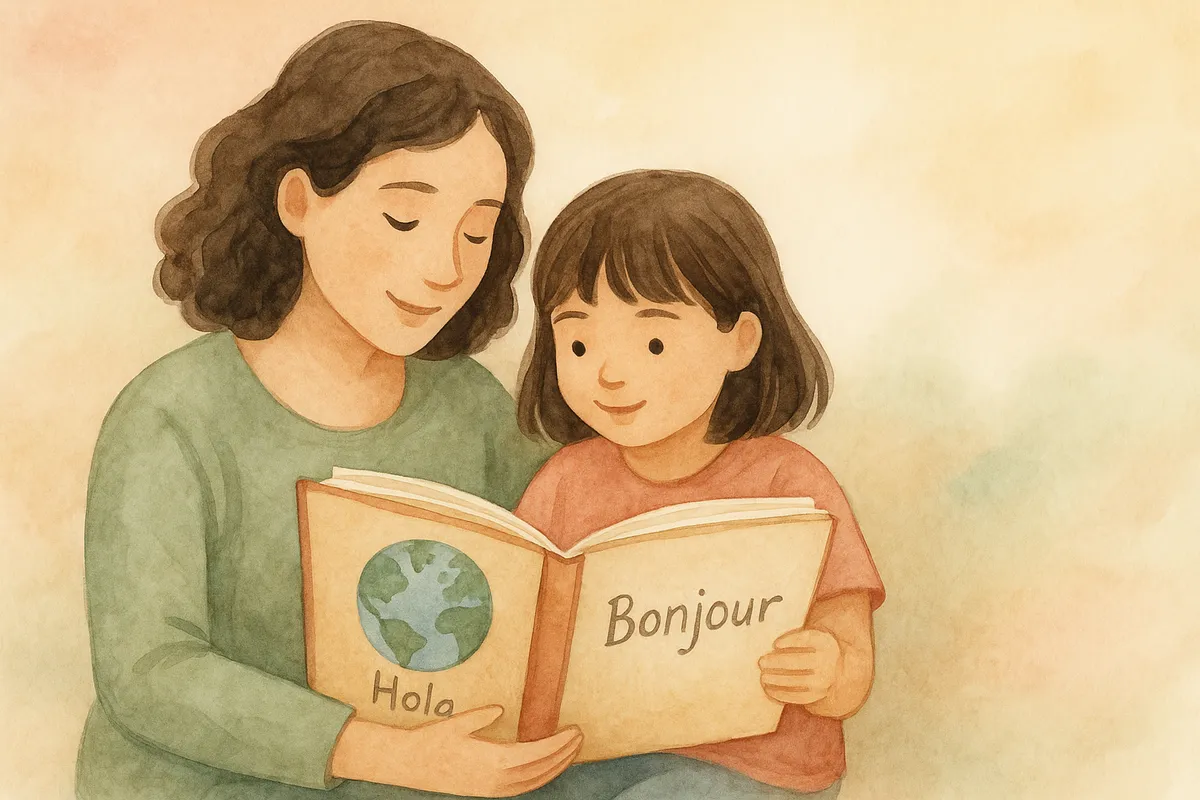
Discover how multilingual children's stories build language skills and cultural awareness through personalized audio adventures your child will love.
Compatibility note: Fablino creates standard MP3 audio files that can be loaded onto Toniebox, Yoto Player, FABA, and other MP3-compatible devices. Fablino is not affiliated with, endorsed by, or sponsored by Boxine GmbH (Toniebox®), Yoto Ltd (Yoto®), or any FABA trademark owner. All third-party brand names are the property of their respective owners.
See our full Trademark Disclaimer →Have you ever watched your child's eyes light up when they hear a word in another language? Maybe they picked up "hola" from a neighbor or started counting in French after hearing it on a show. There's something magical about how naturally children absorb new languages, especially when they're woven into stories that capture their imagination.
Multilingual children's stories offer so much more than entertainment. They're like little windows into different cultures, helping your child develop language skills while exploring new worlds. When these stories are personalized with your child's name and interests, they become even more powerful — creating connections that stick long after the story ends.
But finding quality multilingual content that truly engages your child? That's where many parents hit a wall.
The Challenge of Finding Engaging Multilingual Content
Most multilingual children's stories fall into one of two camps: either they're educational but boring, or entertaining but lacking real language learning value. You'll find plenty of books that teach basic vocabulary through repetition, but few that weave multiple languages naturally into compelling narratives.
Then there's the personalization problem. Generic stories about random characters don't hold your child's attention the way a story featuring them as the hero does. When Luna hears her own name in a Spanish adventure, or when Kai discovers he's the main character in a story that switches between English and Mandarin, the engagement level skyrockets.
Many parents also struggle with pronunciation and authenticity. You might find a beautiful bilingual book, but if you're not confident speaking the second language, your child misses out on hearing proper pronunciation and natural rhythm. This is especially important for tonal languages or those with sounds that don't exist in English.
The screen-free aspect adds another layer of complexity. While there are multilingual apps and videos available, many parents prefer audio-only options that don't contribute to screen time but still deliver rich, immersive language experiences.
Building Cultural Bridges Through Storytelling
Multilingual stories do something remarkable — they help children understand that different languages aren't just different words for the same things, but gateways to entirely different ways of seeing the world. When your child hears a story that naturally incorporates Spanish phrases while exploring a Mexican marketplace, they're not just learning vocabulary; they're developing cultural awareness.
This cultural connection becomes even stronger with personalized stories. Imagine Aisha hearing herself navigate a bustling souk in Morocco, picking up Arabic phrases as she searches for a magical lamp. She's not just passively listening; she's experiencing the culture through her own adventure.
Start by choosing stories that incorporate cultural context, not just language switching. Look for narratives that explain why certain phrases are used or what cultural significance different words carry. Encourage your child to ask questions about the cultures they encounter in these stories. Follow up by exploring foods, music, or traditions from the countries featured in their favorite multilingual tales.
Strengthening Language Retention Through Repetition
Children learn languages best through repeated exposure in engaging contexts. Unlike rote memorization, multilingual stories provide natural repetition within compelling narratives. Your child hears the same French phrases multiple times as Theo navigates his Parisian adventure, but each instance feels fresh and purposeful.
Personalized stories take this repetition to the next level because children actually want to hear them again and again. When your child is the protagonist, they're more likely to request the same story multiple times, giving them the repeated exposure that's crucial for language acquisition.
The audio format is particularly powerful here. Children can listen while playing, during car rides, or as they wind down for bed. This passive exposure helps embed pronunciation patterns and rhythm in ways that reading alone can't match.
Create a rotation of 3-4 favorite multilingual stories that your child can cycle through. Let them choose which story they want to hear each day. Pay attention to which foreign phrases they start using in regular conversation — this shows the language is really sticking.
Developing Global Mindset Early
Exposure to multiple languages through storytelling helps children develop what educators call a "global mindset" — an understanding that the world is diverse, interconnected, and full of different perspectives. When Luna hears stories in Italian, Japanese, and Portuguese, she's learning that her own experience is just one of many valid ways of living.
This mindset becomes particularly strong when children can see themselves in these global contexts through personalized storytelling. Rather than feeling like an outsider looking in, they experience being part of different cultures and linguistic communities.
Personalized multilingual stories also help children from bilingual or multilingual families feel seen and valued. When Kai hears stories that seamlessly blend the languages spoken in his home, it validates his multilingual identity rather than making him feel like he needs to choose one language over another.
Introduce stories from different continents and language families. Talk with your child about the places and cultures they encounter in their stories. Use a world map to show where different languages are spoken, connecting the audio experience to geography and cultural understanding.
Bringing Global Adventures to Your Child's Audio Device
The beauty of modern audio storytelling is how easily it fits into your family's routine. Whether your child listens on a Toniebox during quiet time or through headphones during a long car ride, multilingual personalized stories can transform any moment into a language learning opportunity.
Platforms like Fablino are changing the game by generating and narrating multilingual children's stories that feature your child as the main character. Instead of searching through countless generic options, you can create stories that blend your child's interests with authentic language exposure. The AI-powered narration ensures proper pronunciation while the personalization keeps your child engaged story after story.
These screen-free stories for kids work particularly well because children can listen independently, absorbing languages naturally without the distraction of visual elements. The focus remains on the language, the story, and their imagination.
Your Child's Multilingual Journey Starts Today
Every child deserves to see themselves as a global citizen, capable of connecting with people from different cultures and linguistic backgrounds. Multilingual personalized stories are more than entertainment — they're building blocks for empathy, curiosity, and communication skills that will serve your child throughout their life.
Start small, stay consistent, and watch as your child's world expands one story at a time. The languages they encounter today in their personalized adventures could spark passions that last a lifetime.
Create Your Child's Story
Make your child the hero of their own personalized bedtime story with professional narration.
Try Fablino FreeRelated Stories
Unlocking Multilingual Adventures: Personalized Stories for Kids
Discover how multilingual audio stories can introduce your child to new languages naturally, creating engaging adventures that spark curiosity and cultural understanding.
Unlocking Creativity: Multilingual Stories for Kids
Discover how multilingual audio stories help children develop language skills naturally while exploring diverse cultures through personalized adventures.
Exploring Multilingual Storytelling with Fablino for Kids
Discover how multilingual storytelling naturally introduces children to new languages and cultures through engaging, personalized audio adventures they'll love.