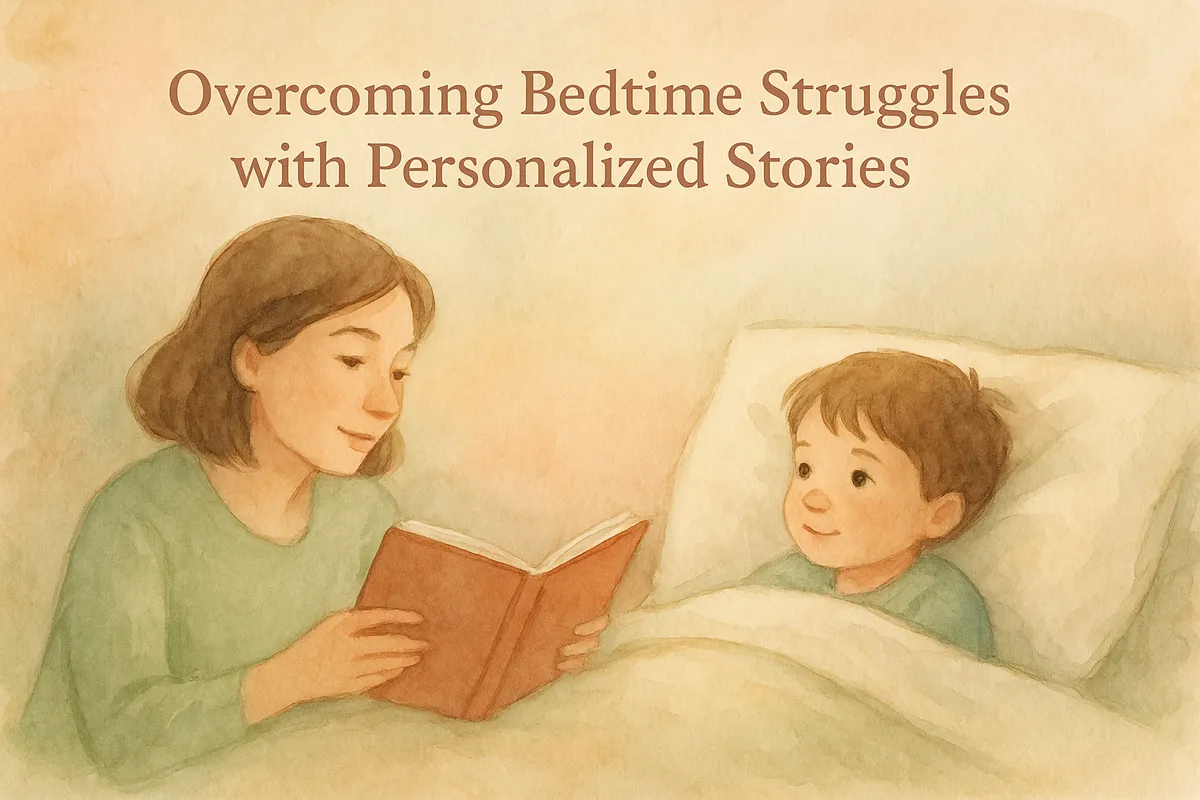
Transform nightly bedtime battles into peaceful routines with proven strategies that work with your child's developing brain, not against it.
It's 9:23 PM. The bedtime routine that was supposed to take 30 minutes has stretched into its second hour. Your child has asked for water twice, needed three more trips to the bathroom, and is now lying in bed with eyes wide open, asking "just one more story?" for the fourth time. You're exhausted, frustrated, and wondering why something that should be natural – going to sleep – has become the most challenging part of your day.
If this sounds familiar, you're not alone. Millions of parents face bedtime struggles every single night, turning what should be a peaceful transition into a battle of wills. The good news? These struggles aren't a reflection of your parenting skills, and they're absolutely solvable. See also: how personalized bedtime stories ease sleep struggles — a deep-dive into the psychology behind why they work. Tonight, you'll discover why bedtime battles happen and learn practical strategies that can transform your evenings from chaotic to calm, including how the right stories can become your secret weapon for smoother sleep transitions.
Why Your Child's Brain Fights Sleep
Bedtime struggles aren't just about stubbornness – they're rooted in how children's developing brains work. Unlike adults who naturally wind down as evening approaches, children's minds often become more active when they're overtired. Their developing nervous systems struggle to shift from the high-energy state of daytime play to the calm required for sleep.
Add to this the fact that bedtime represents separation – from you, from the day's activities, from consciousness itself – and it's no wonder children resist. Their protests aren't manipulation; they're genuine anxiety about letting go of the day. Young children also have limited understanding of time, so "bedtime" can feel sudden and jarring, even when you've been preparing them all evening.
The traditional approach of simply enforcing a strict bedtime often backfires because it doesn't address these underlying emotional and neurological needs. Instead of fighting against your child's natural responses, the most effective strategies work with their developmental stage, creating conditions that naturally promote sleepiness and security.
Create a Predictable Wind-Down Ritual
Consistency is your child's best friend when it comes to sleep. A predictable routine signals to their brain that it's time to start producing sleep hormones and winding down their nervous system. The key is starting this process at least 30-45 minutes before you want them actually asleep.
Consider Sarah, whose 4-year-old Emma used to fight bedtime every night. Sarah created a simple sequence: bath time, pajamas, brushing teeth, then story time in bed with dimmed lights. Within two weeks, Emma began naturally getting sleepy during story time because her body learned to anticipate sleep after this consistent sequence.
Here's how to build your own wind-down ritual: • Start the routine at the same time every night, even on weekends • Include calming activities like a warm bath, gentle stretching, or quiet music • Dim the lights progressively throughout the routine to signal the approaching night • Keep the sequence the same – predictability is more important than perfection
Give Them Control Within Boundaries
Children often resist bedtime because they feel powerless in the process. Offering choices within your established routine helps them feel autonomous while still moving toward sleep. This isn't about letting them decide whether to go to bed, but rather how the bedtime routine unfolds.
Take Marcus, whose 6-year-old son Jake would have meltdowns every night about pajamas and story selection. Marcus started offering two pairs of pajamas to choose from and letting Jake pick between two pre-selected books. These small choices eliminated the power struggles while maintaining the bedtime timeline.
Try these choice-giving strategies: • Offer two acceptable pajama options instead of just announcing "time for pajamas" • Let them choose the order of bedtime activities ("Do you want to brush teeth first or put on pajamas first?") • Create a simple bedtime chart where they can check off completed steps • Allow them to choose their stuffed animal or comfort object for the night
Make Story Time the Bridge to Sleep
Reading together isn't just a nice bedtime tradition – it's a powerful sleep tool. Stories naturally slow down racing minds, and the rhythm of your voice has a calming effect on your child's nervous system. The key is choosing or creating stories that guide them toward sleep rather than exciting them.
Lila discovered this when she stopped reading adventure stories at bedtime and switched to gentler tales. Her 5-year-old daughter Maya, who used to get wound up during story time, began falling asleep halfway through their reading sessions when the stories became more soothing and relatable.
Optimize story time for sleep success: • Choose stories with calm, gentle themes rather than exciting adventures • Read in a slower, softer voice as the story progresses • Select books that are familiar – new stories can be too stimulating before bed • Position reading time as the final activity before lights out, creating a clear transition
Address Their Fears and Worries
Many bedtime struggles stem from anxiety – about the dark, about separation, or about the day ahead. Children need to feel emotionally safe before they can physically relax into sleep. Taking time to acknowledge and address their worries, rather than dismissing them, often resolves resistance more effectively than any sleep technique.
When 7-year-old Alex started having bedtime meltdowns, his mom Jennifer realized he was worried about a difficult situation at school. Once she created space for him to talk about his concerns during their bedtime routine, his sleep resistance disappeared almost immediately.
Help your child process bedtime emotions: • Ask open-ended questions about their day during wind-down time • Validate their feelings rather than trying to immediately solve problems • Create a "worry time" earlier in the evening so concerns don't surface at bedtime • Use comfort objects or nightlights to address fears about darkness or being alone
When Stories Feature Your Child as the Hero
Personalized bedtime stories take the calming power of reading to the next level by making your child the protagonist of gentle, sleep-focused adventures. When children hear stories about themselves successfully navigating bedtime, going on peaceful journeys, or feeling brave and calm, it reinforces positive associations with sleep.
These stories work because they speak directly to your child's sense of identity while modeling the exact behaviors and emotions you want to encourage at bedtime. Tools like Fablino can create these personalized stories in about 90 seconds, featuring your child as the hero of calming adventures that guide them naturally toward sleep. The stories adapt to your child's interests and current challenges, making bedtime feel special rather than like a chore.
Tonight Can Be Different
Bedtime struggles don't have to define your evenings. Start with just one strategy tonight – perhaps creating a simple wind-down routine or offering your child a choice about their pajamas. Small changes often create surprisingly big shifts in children's bedtime behavior.
Remember, consistency matters more than perfection. Your child's sleep patterns won't transform overnight, but with patience and the right approach, bedtime can become the peaceful, connecting time you both deserve.
Create Your Child's Story
Make your child the hero of their own personalized bedtime story with professional narration.
Try Fablino FreeRelated Stories
Transforming Car Rides with Personalized Audio Stories
Discover how personalized audio stories can transform stressful car rides into engaging adventures your kids will actually look forward to—no screens needed.
Screen-Free Activities for Kids by Age: A Practical Guide
Struggling to keep your kids entertained without screens? Here are age-appropriate screen-free activities for kids aged 2 through 10, including audio stories and creative play.

Transforming Quiet Time with Personalized Stories for Kids
Discover how personalized audio stories can transform chaotic quiet time into peaceful moments your child actually looks forward to, while building listening skills.