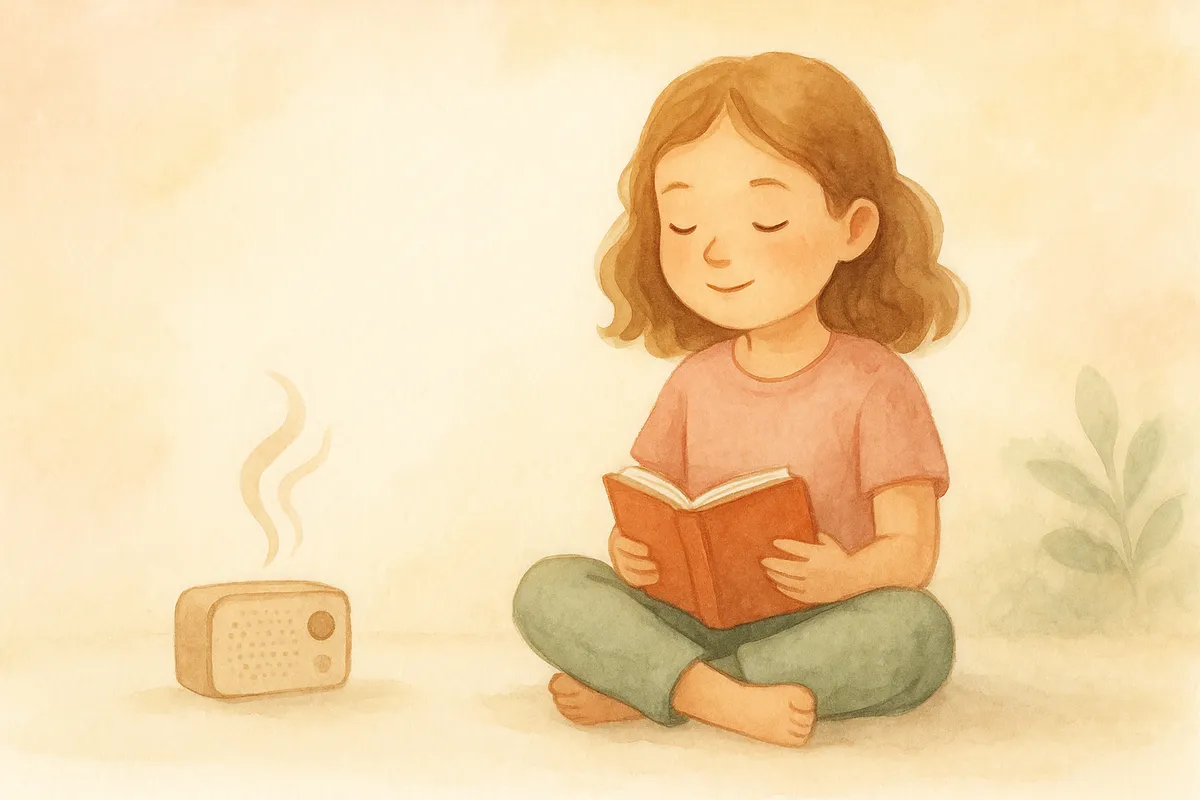
Discover how personalized audio stories can transform chaotic quiet time into peaceful moments your child actually looks forward to, while building listening skills.
Compatibility note: Fablino creates standard MP3 audio files that can be loaded onto Toniebox, Yoto Player, FABA, and other MP3-compatible devices. Fablino is not affiliated with, endorsed by, or sponsored by Boxine GmbH (Toniebox®), Yoto Ltd (Yoto®), or any FABA trademark owner. All third-party brand names are the property of their respective owners.
See our full Trademark Disclaimer →Do you ever find yourself wishing for those magical moments when your child settles into calm, independent quiet time? You know the ones — where they're not bouncing off the walls, asking for snacks every five minutes, or melting down because they're bored. Instead, they're peacefully engaged, their imagination running wild, and you actually get a few minutes to breathe.
Quiet time doesn't have to be a daily battle. With the right approach, you can transform these moments into something your child genuinely looks forward to. The secret? Personalized stories for children that capture their attention and nurture their growing minds. When kids feel truly connected to what they're experiencing, everything changes — their focus deepens, their creativity blossoms, and that elusive calm you've been hoping for finally arrives.
When Quiet Time Becomes Chaos Instead of Calm
Quiet time should be a natural part of your child's day — a chance for them to recharge, process their experiences, and develop independence. But if you're like most parents, you've probably discovered that getting kids to embrace quiet time is easier said than done.
Many children struggle with the transition from active play to stillness. Their minds are still racing from earlier activities, making it nearly impossible for them to settle into a peaceful state. Without engaging content that truly captures their interest, they quickly become restless and start seeking stimulation elsewhere.
Screen-free quiet time presents its own unique challenges. While you want to limit screen time, finding alternatives that hold your child's attention can feel overwhelming. Traditional books might work for some kids, but others need something more dynamic to keep them engaged.
Then there's the listening skills component. In our fast-paced world, children often struggle to focus on one thing for extended periods. This makes quiet time feel more like a chore than the restorative experience it should be. Without the right tools and approach, what should be a peaceful interlude becomes another source of stress for both you and your child.
Create Stories That Mirror Your Child's World
Personalization is the game-changer when it comes to capturing children's attention during quiet time. When kids hear stories featuring characters who share their interests, face similar challenges, or live in familiar settings, they become emotionally invested in ways that generic stories simply can't achieve.
Think about Luna, who's obsessed with dinosaurs and loves helping in the garden. A personalized story might feature her discovering a friendly baby triceratops in her backyard vegetable patch, leading to an adventure about caring for plants and prehistoric creatures.
Start by identifying your child's current fascinations — whether it's space, animals, cooking, or building things. Then look for screen-free stories for kids that weave these interests into compelling narratives.
Next, pay attention to challenges your child is facing, like starting school or welcoming a new sibling. Stories that address these situations help kids process their emotions in a safe, imaginative space.
Finally, consider including familiar people or pets in the story landscape. When children recognize elements from their own lives, they naturally become more engaged listeners.
Build Listening Skills Through Immersive Audio Experiences
Audio stories offer unique advantages for developing children's listening skills and imagination. Unlike visual media, audio content requires kids to actively create mental images, strengthening their cognitive abilities and creative thinking.
Consider Theo, who initially had trouble sitting still for more than five minutes. Through regular exposure to engaging audio stories, he gradually developed the ability to focus for 20-30 minute stretches, a skill that transferred to other areas of his life.
Begin with shorter stories — around 10-15 minutes — and gradually increase the length as your child's attention span develops. This builds confidence and prevents frustration.
Create a special quiet time space with comfortable seating, soft lighting, and minimal distractions. This helps signal to your child's brain that it's time to shift into listening mode.
Encourage your child to close their eyes while listening, which helps them focus more deeply on the story and creates more vivid mental imagery.
Establish Consistent Quiet Time Routines
Consistency is crucial for making quiet time a natural, expected part of your child's day. When kids know what to expect, they're more likely to embrace the transition from active play to calm listening.
Priya's family discovered that having quiet time at the same time each day — right after lunch — helped her body and mind prepare for the shift. She began looking forward to this special time rather than resisting it.
Choose a specific time that works with your family's schedule and stick to it. Whether it's mid-morning, after lunch, or during that pre-dinner witching hour, consistency helps establish the routine.
Develop a simple transition ritual — maybe dimming lights, getting a special blanket, or choosing which story to listen to. These cues help your child's nervous system prepare for quiet time.
Start with shorter sessions and gradually extend them as your child becomes more comfortable with the routine. Success builds on success, so celebrate those early wins.
Transform Any Moment with Audio Story Magic
The beauty of audio stories lies in their incredible versatility. Unlike books that require good lighting and your full attention, personalized audio stories can transform any moment into an opportunity for calm, imaginative engagement.
Whether your child is listening on a Toniebox, tablet, or phone, they have access to stories that speak directly to their interests and experiences. Felix discovered that listening to stories about a character who shared his love of trains and his recent move to a new house helped him process his own feelings about change while staying peacefully engaged during quiet time.
Fablino generates and narrates personalized stories that your child can listen to independently, creating those magical quiet moments you've been hoping for. Each story is crafted around your child's specific interests and circumstances, ensuring deep engagement and meaningful connection.
Your Peaceful Moments Await
Transforming quiet time doesn't happen overnight, but with personalized stories for children and consistent routines, you'll start seeing changes sooner than you might expect. Those chaotic moments can become peaceful interludes that both you and your child treasure.
Remember, every child is different, so be patient as you discover what works best for your family. The investment in creating meaningful quiet time pays dividends in your child's emotional development, creativity, and overall well-being.
Create Your Child's Story
Make your child the hero of their own personalized bedtime story with professional narration.
Try Fablino FreeRelated Stories
Transforming Car Rides with Personalized Audio Stories
Discover how personalized audio stories can transform stressful car rides into engaging adventures your kids will actually look forward to—no screens needed.
Screen-Free Activities for Kids by Age: A Practical Guide
Struggling to keep your kids entertained without screens? Here are age-appropriate screen-free activities for kids aged 2 through 10, including audio stories and creative play.
How Personalized Stories Can Combat Nighttime Anxiety in Kids
Personalized audio stories — where your child is the hero — are one of the most effective tools for easing nighttime anxiety. Here’s why they work, and how to use them.